thehumanangle.in

Mental Hygiene

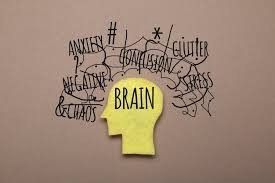
The old adage, “Prevention is better than the cure,” is very much applicable to mental health. It is important to understand the early symptoms of mental illnesses and figure out how to deal with them before they become big enough to notice and convert into a full-blown illness.

Our awareness workshops regarding mental health and common mental illnesses will help identify these early symptoms.

We’ll focus on steps that can be taken to prevent these symptoms from surfacing or the existing symptoms from getting worse.

Neuroscience of Communication

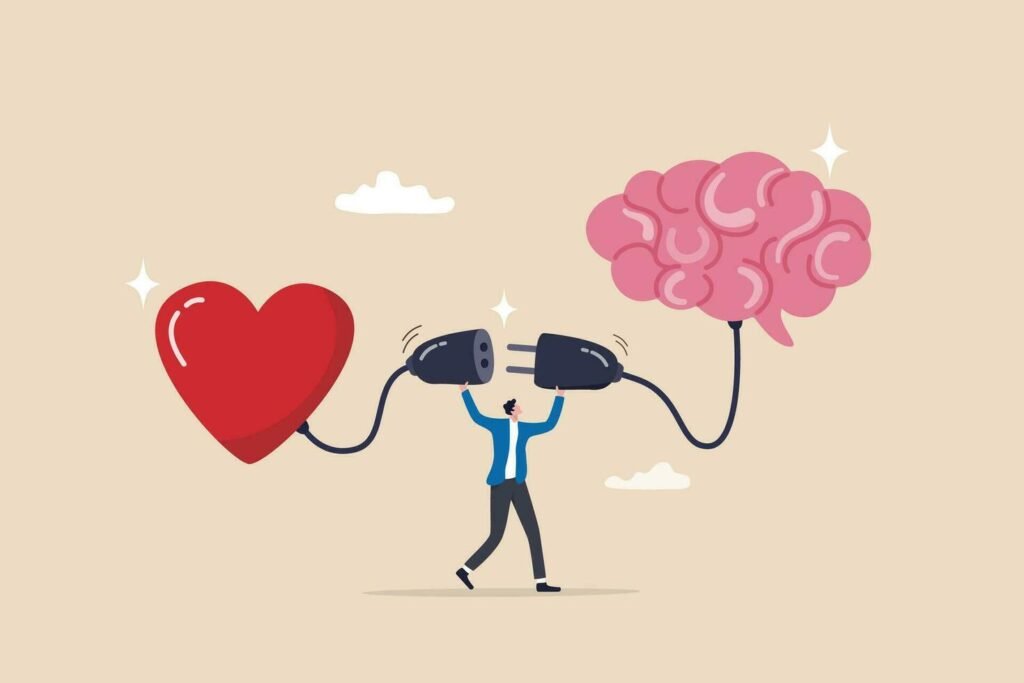
Our brain controls how we communicate with our environment. It works to maintain a dynamic equilibrium between our internal and the external world, while ensuring that all our needs are met.

The brain does this by setting up multiple integrated circuits and pathways that beautifully coordinate everything.

In this module, we will translate our brain’s approach by mimicking it in the external world.

Neuroscience of Stress and Distress

We feel stressed when demands on us exceed how much we can cope with. Stress symptoms can be so mild that at times we might not even realise that we’re stressed.

That is, until one day our stress suddenly manifests as a cardiac arrest or a stroke. 

Ironically, most people who go through these sudden catastrophic events appear to be healthy, high achievers who manage their nutrition well and exercise regularly. Why does this happen?

In this module, we try and answer that question. We focus on concrete steps to prevent the impacts of stress that can be taken based on clues our brain leaves behind. We focus on the latest research on heart-rate variability and the gut-brain axis, which gives clues for underlying stress.

Finally, we will explore easy ways to manage stress.

Neuroscience of Emotions and Emotional Intelligence

The origin of the word emotion is from “e-motore”, which means “to move away”. To move away from what? Aren’t emotions supposed to help us make sense of our lives? Actually, while emotions do matter, handling them intelligently matters more.

In this experiential module, we focus on ensuring that the control switch of our emotions lies with us, and not with the world. So, when someone says jump, we don’t ask, “How high?” but rather, “Why?”

Does the brain have a separate approach for handling emotions? Can the brain compartmentalise emotions? Does emotional intelligence always play a positive role? Or is there a connection between toxic, manipulative behaviour and emotional intelligence?

We will explore all these questions and aspects of emotions and emotional intelligence in this module.

Neuroscience of Leadership

In the business world, everybody knows what toxic leadership looks like. However, when it comes to defining good leadership accurately, there are many challenges. Leadership is not a unitary concept, but instead something that’s a harmonious orchestra of multiple skill sets, ethics, environmental awareness and emotional sensitivity.

Leadership behaviour is a very apt simulation of the brain’s structural and functional integrity and coordination.

This experiential module uses the ‘Onion Model’ to build the leadership development needs of organisations. It draws from multiple theories of brain functioning and helps convert these into leadership behaviours that can be learnt and mastered.

Building Happy and Successful Teams

Many of us may have had bad experiences working in teams. There are always difficult people who don’t work enough and still get the credit. Or those above you who take credit for all your work without making any contribution.

However, teamwork is an unavoidable reality of working in organisations.  When teams click, it can lead to incredibly powerful outcomes. 

Our brains are hardwired to survive at all costs, and this requires us to compete for limited resources. However, our brains are also programmed to hunt and forage together, because this collaboration was necessary to ensure survival. Hence our brain has neurocircuitry which allows us to both collaborate or compete.  

This module addresses the way our brains evaluate costs and benefits of competing versus collaborating. It will also help understand how to overcome the instinct to believe that “different is dangerous”.

Mastering these aspects can help us become both individual contributors and team players.

Developing Women Leaders

Women form close to 50% of work force. However, their representation in higher management and leadership roles is not proportionate. Since technical abilities are honed through the same educational processes as males and they are evaluated through the same selection processes as males, ability is rarely the cause of obstruction. 

Even in modern times, women in most cases play the role of nurturers and primary caretakers. The needs of family/ children and professional responsibilities are usually on collision course. Marriage coincides with the first job, the time for first promotion with the birth of first child and so on. This competition between biological clock driven social/ family obligations and professional aspirations can arouse guilt and a sense of feeling torn apart by conflicting demands.  Mostly therefore, professional growth gets sacrificed and hence the low representation of women in senior positions.  

Is there a way out of this situation? Organizations are helping by introducing flexi- timings, work from home and creches at workplace. However, these initiatives don’t seem to be yielding the requisite outcomes as witnessed by the absence of women in significant numbers in senior positions. 

Since organisations are becoming flatter, collaboration is becoming more important and competitive behaviour is being frowned upon as it can destroy team’s equilibrium.

Collaboration, firm disciplining and nurturing behaviours are inherent requirements when bringing up children. These very attributes are the need of the hour in today’s flat, team driven organizations. Since women are still primary care givers and nurturers in families, they bring up children who grow into ethical and productive members of society. The skill sets which women use to bring up families match the skills needed in an organizational context for collaborative leadership.

This customizable module addresses the steps that women can take to work in tandem with organizational initiatives so that the full potential of women can be available to organizations. 

This module also explores whether male and female brains are actually different. Are women more emotionally intelligent? Does the Queen Bee syndrome exist? How can women break into the “old boys’ club”?

The ultimate aim of this module is leveraging women’s inherent strengths to metamorphize them from employees to empowered and empowering leaders?
Mentoring and Coaching

The journey to the top starts with working with a group of people, who then become your team. From here, based on how you chart your journey, you start taking up leadership roles, beginning perhaps with a team lead role. 

In the course of this journey, your peers can become your subordinates or competitors. And, sometimes, your friends can become your bosses.

Adjusting to these changes and modifying behaviour accordingly to ensure success in one’s journey to the top can be challenging. It is difficult to understand people because their behaviour comes from their contextual conditioning as they are growing up. This can cause frictions that makes things unpleasant and requires you and everyone around you to be emotionally vulnerable.

Coaching and mentoring can help here. We ask the right questions to stimulate your brain into finding answers that are unbiased to help evaluate your own behaviour, aspirations, expectations and fears. An unbiased trained professional’s outsider perspective can help by acting as a sounding board and also contribute to one’s understanding of the complexities of the situation.

This guidance can be   invaluable in your journey to the top. You know it need not always be ‘Lonely at the top’.

Building Entrepreneurship Behaviour

Entrepreneurship demands that you take calculated risks. Hence, becoming an entrepreneur is not everybody’s cup of tea. However, it is also important to understand that entrepreneurship is NOT a solo journey. Moreover, attaining success is relatively easier than sustaining it.

Hence, it is important to build good, balanced teams that are trustworthy. You cannot do everything by yourself. You need to find people to complement   what you are not good at. Otherwise, it is very easy to get stuck in the ‘It is my baby syndrome’.

This module helps entrepreneurs hone their leadership capabilities and understand the kind of teams they need to build for sustained success. It will teach you how to trust others with your dreams and help you exit out of ‘My way or the highway’ approach.

Find us interesting?

The Human Angle offers inputs driven by the latest research in neuroscience to help build healthy, balanced , productive and agile employees, teams, leaders and organizations.